Thursday, December 17, 2009

How cold is cold?


Tuesday, the thing was solved. “It was a good day,” Gord said, upbeat. “As if everyone knew exactly what to do – we were a team.” And essentially, the ice set well. On the way home, everyone fell asleep in the car.


That night we went to see Musica Intima, in a show called Noel at the West Vancouver United Church.
Twelve performers with gorgeous voices singing ancient melodies and carols from different locations across the world. Poetry in voice. We closed our eyes in the warm church and let the melodies float over us.


It was absolutely refreshing to sit in the same room as an ephemeral art form and just be with it.


Then yesterday, Gord came back, exhausted, yet on edge. His eyeballs were hurting from the cold. We went out – he seemed driven to get to the store before it closed, resolutely determined to get some goggles for the next day’s work. How many different ways can you say it’s cold? It’s really cold, It’s super cold. Scary cold. How long can you work in minus 28 degrees? With fan-induced wind chill? So we stocked up on goggles – who knows how long it takes an eyeball to freeze?


And, unlike the one-day reprieve on Tuesday, yesterday the ice was brittle. 70 per cent broke when they pried it from the trays.


“On the first day I could be in that space without a hat. Yesterday, it was impossible.”

I consoled the crew that we’re still ahead of the game. For Turin, the other winter Olympics, it wasn’t until January 5th that we had ice. And Gord got reassurances from Scott that they would concentrate the cold at the back of the building, not in the studio. “They’ve been helpful in terms of everything,” he says. “They made a ballet of carrying the plates on those forklifts, with two of those things backing up and moving forward. I had to stop and watch.”


Becky brings Gord a sandwich and they spend the time it takes to eat the sandwich in the warm room before heading back to the cold studio. Jaz took pictures yesterday – they reminded me of the inside of the church at Fenestrelle, before they figured out how to get ice from bubbly water.


This morning, Gord drew the solution he free-associated yesterday: a different way to cut the ice prior to removing it from the tray.


We discussed the benefits of petting the cat for one minute, how the cold studio warehouse is Not a church! And how Sleep Won. Maybe we’ll see Becky tomorrow at the best ever place for coffee on the west coast of Canada.

Tuesday, December 15, 2009

It's in the water

Countdown update: 12 days to Christmas, 60 days til the opening of the Olympics, as round tiny snow balls flurry past us.


World leaders meet in tension in Copenhagen, and a blizzard is expected to blanket the lower mainland for tomorrow. We are up at 5 for the first ferry into Vancouver. Early dawn stretches into darkness past 7:30. All weather stations predicting 10 centimetres of snow Monday afternoon and freezing rain on Tuesday for the rush hour drive home.The globe seems to be cooling on the West Coast. I say Let it Snow!


That was yesterday. A dusting of snow - then, nothing but rain since.

“Lots of things were happening today,” Gord reports at the end of Monday's work, “some of which were interesting, some of which were not. The process can be humbling; you’re at the mercy of unknown elements. I have to remind myself to be patient.” The ice isn’t coming out of the plastic trays cleanly; it’s sticking in certain areas. “I’ve never seen it before,” he said.

“It’s a lot colder in there than the other location ( in Chicago); there are technical differences. We did some tests on Thursday last week. Friday we poured a whole batch; only half were usable.”

At Artigiano, the day's work is laid out. Erik: “We ran into a few bumps; it’s really really cold in that space. We’re in the experimental stage, given the circumstances.”


“We know a lot about the variables that are at play,” Gord says. “the water on the site is unique to us; it’s mineral content; whatever is in it . That and the kind of freezing. This place uses air circulation to freeze, unlike Chicago." In Fenestrelle the water came down the mountain in streams, was very oxygen-rich, so it bubbled. Initially that slowed them down. (See http://paintingsbelowzero.blogspot.com/2006/01/we-have-ice-sitting-onstage-in-chiesa.html)


“It’s Improv, " I suggest. "Improv/Science,” Erik counters. It's the creative process, I think, confident in Gord's determination, the same he uses to excel in tennis, in hockey, in squash. Observe, be patient and disciplined. Because of intense cold, the plastic trays are super frozen when the liquid is poured, so that early liquid freezes too quickly. When the second layer is poured on top, it freezes more slowly. Both ices are different in structure and don’t adhere to each other effectively.

“You have to discover how to work with water – you might heat it before the pour to slow down the freezing. Or make sure the entire pour is done at the same time, so everything freezes uniformly.” Put the metal plates on the floor, so the freezing happens both from the air and from the plates. Put trays on pallets to see how that would change the consistency of the ice. It’s as unpredictable as the weather.

I sent them off to the gulag, this morning, all of them hopeful.


“We’ll see the results today.”

Friday, December 11, 2009

Below zero studio warehouse

“You don’t want to know,” Gord said last night over supper.


Jaz and I sat across from Erik and Gord at a corner table in a family-style Mexican restaurant on Denman. Lights of every color were strewn around in homage to the season; the place was jammed. Minus something-or-other degrees outside and we had begun to thaw.


We were asking about the safety tour the crew experienced the first day at the cold storage warehouse in Richmond.


But Erik and I pressed and the details came out: the place was spic and span clean, really bright and somehow colder than The Fulton in Chicago. With a breeze that sends chills to the bones faster. The smell – not so pungent. They do fish here, and the building doesn’t have the history.


“I’ve seen these places, I know what they’re about,” Jaz had said, taking inventory of his remembered experience.


These warehouse facilities –where foods are temporarily stored as they travel from harvest to truck to warehouse to supermarket– are part of all our lives, but we don’t see them, or even consider them. We were talking about the danger of this particular place. Jaz noted that the fork lifts, those speedy, turn-on-a-dime vehicles carrying thousands of pounds of stuff – which suddenly materialize around a corner -- are bigger here than at The Fulton. But they're just as fast.


“Don’t for one second think I can see you,” the driver of one had said to Gord, after whipping around him with a heavy stack of boxes towering above them both. “Think like a mouse,” he said, “mice are almost never in the center of the room, they wander exclusively on the periphery.”

But the worst was the caveat, “If you smell ammonia, get the hell out of there - fast. It will suck your body of oxygen and you’ll fall to the floor.”


“What does ammonia smell like?” Jaz asked. I imagined the alarm going off – as it did only twice in the past 30 years in that space. Wondered how quickly and how much ammonia it takes to drop someone to the floor, and once down, do they ever get up?


For your own safety, you’re always anywhere with a buddy.


You wear neon yellow and orange outfits. I suggested bringing your cell phone, in case you get shut into a space but they freeze into uselessness within a few moments.


On the ferry we had talked to a friend, caring for her 90-something year old mother. “It’s a beautiful day,” her mother had said, looking out the window at the snow-capped mountains from her hospital room in Vancouver. “That’s Switzerland.”

“We’re all subject to this, “ she had said, “no one gets out alive.”

That and the newspaper articles about deaths by drunk drivers needled into my sense of holiday euphoria and the excitement of beginning this new endeavour.

I felt like a child again, waking from a nightmare, or understanding for the first time what the phrase "putting the dog to sleep" meant. Or that dark sense of luckiness and dread - when you step into an intersection and the car whizzing past doesn't quite hit you. I looked into the faces of these men, whom I love, taking inventory of my attachments. Trying to understand how we got here, and what we’re doing.

The Globe & Mail photographer came today and Gord laments that we have nothing to show yet.

Photos by Jaz Halloran.

Thursday, December 10, 2009

On a schedule

How many days until the Olympics? And did anyone catch the bit on CTV? This morning we opened our email only to find that Peter Grainger’s piece had aired last night around the dinner hour.


A song loop served as background "Have yourself a merry little . . . " for our first crew gathering in the cafe at Westin Bayshore. Missing Erik and Becky, we handed out checks and PBZero jackets and planned our daily travel across the city to the cold studio warehouse. Here they are, Gord, Jaz, Briana and Ari, rough and ready, against the golden lobby, bedecked with sparkling evergreens. Then, a surprise: a voice mail message from the office of the Governor General of Canada, replying to our invitation with a question: what time is the opening of Ice Gate?


Forgot to mention the weather. Brilliant sunshine, arctic blast of air; the mercury hovering between minus 4 and minus 7 celsius.


Yesterday in conversation with the Western Arts Correspondent from The Globe and Mail, (Canada’s national newspaper), Gord observed that around the world, there are places where snow and ice are rarely seen. Countries, where fierce, white winters - once commonplace - are less predictable, occasional, or not at all. That in our warming world, the experience of big ice and snow is becoming precious and memorable.

He was also talking about Paintings Below Zero. Jewel-like, mysterious and beautiful, the work is also fragile, much like the planet on which we live. It’s just a matter of one degree – a slight, seemingly insignificant, silent degree, which is the difference between a thing of beauty and a big, slushy mess. The bird’s eye view from the space shuttle springs to mind, our world, spinning round and round.

"You don't have much time," Marsha Lederman said, referring to the unknowable nature of the work, the breaking, the melting. "You’re on a schedule.” And he said, “I have to be relaxed about it. The medium I’m working with is fragile and ephemeral.” As we are.


This is Erwin Mah, a very capable and intelligent gentleman who hosted us for breakfast at the gracious dining room at The Westin Bayshore upon our arrival. A good meeting, lots of exciting ideas. Now homework.

Erik Olson arrives from Calgary tonight. He and Jaz have been with us since 2006, Turin. see: www.paintingsbelowzero.blogspot.com

Tuesday, December 8, 2009

The adventure begins


Linsey Hull took these photos, and I just love them. Here they are at Northwest Contracting during the CTV interview, which hasn't aired yet. Allan May has been so resourceful and professional and just downright affable - easy to work with - thorough. And best, excited about the challenge, loving the work. The wall is as sturdy and tight as it can be; now it's just the engineer to sign off on it. It's December already. Tomorrow, we begin in the city.


Early ferry. A breakfast meeting. Afternoon, an interview with The Globe & Mail. Last minute logistics - a cell phone, setting up our transportation across town with the crew. I'm bringing our embroidered black Paintings Below Zero jackets. Checks and contracts. Squash racquets. Just heard today that our lodging in Richmond for February will work out. Eight weeks 'til opening. I'm excited.

Friday, December 4, 2009

Press on


At the last rehearsal for Performance for Ice Gate Sunday, Judith and Julien Mathieu, two of the dancers, presented us with Westworld Magazine, where a full color photo of Paintings Below Zero at Millennium Park in Chicago (above) promoted the upcoming Ice Gate. Ten weeks to go - the excitement is palpable. (Photo by Patrick Pyszka).


Yesterday CTV's Peter Grainger interviewed Gord for two and a half hours in his studio for a special documentary report on Ice Gate. He's going to follow the process - from the making & breaking of the paintings - to the installation of the wall on the site - to the installation of the paintings on the wall - to the opening. Then we got an email today - the piece will probably air on Monday, December 7th on CTV. Tune in!


He brought Adrian Goldberg, who is CTV's Olympic lighting director to light the set and Ron Fisher, cameraman. We met Peter in the nineties, when he worked for CBC and created a short doc on the early ice paintings - he was the first television reporter to do a story. So it was great to see him -- and Adrian, our lighting guy from Chicago's mammoth installation, Ice Wall.


Then they all piled up to Northwest Contracting across the highway where Allan May's crew has constructed the housing which contains the wall.


Linsey Hulls took this photograph for another article. (See selectphotography.ca)

We just found out where we're going to be staying for December and January - what a relief! Now we can figure out the logistics of so many things: crew transport, cell phone requirements, food, crew meetings, even fitness! With only one weekend to go before we're skedded to begin the project in Richmond, it couldn't have been more welcome news.

Friday, November 27, 2009

Everything, poised to begin

THE PRESS HAS ALREADY BEGUN: Science Magazine in Washington, D.C. used an image from the Ice Wall installation to illustrate crystalnucleation. The 2010 official souvenir program was published with a color photo of the artist installing yellow shards at Millennium Park.


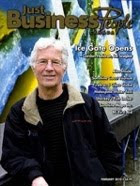
Two weeks ago, Gord was interviewed for an article in Coast Life by Jan de Grasse. And this week Sarah Nicholson is gathering info for an feature in Just Business. We got calls from CTV and The Globe & Mail.


We met with San Francisco, that magical city. And after all the conversations with interested parties, it was City Hall that captured our imagination for a future installation. Thankfully, the sun shone the whole week.


Nothing wrong with that. Because back home on the Sunshine Coast, where the crew was putting together the structure, it was raining pole cats and dogs, stair rods and old wives. It was pouring to beat the band. The devil was whipping his wife. It was raining ropes. And when the skies parted, the crew went back to work.


Now the whole structure is shiny, designed to be air tight once the glass is installed. We're waiting to hear back from the engineer, who'll put his stamp on the plans. Then - believe it or not, the whole kit and kaboodle will be disassembled - and carted to Richmond, where it will be re-installed on the site.


The date for the opening of ICE GATE has been changed to correspond with the Olympic Torch Relay in Richmond, and is now February 9th, in the early evening.

In Vancouver, Ari worked out the important agreements with the cold storage location where we'll make the paintings. We're being inundated with INTERN replies to a Craig's List ad for help with the project. Erik Olson is in town; the painting Core Crew is gathering.

But there are questions: among them: we still don't know where we're going to stay in Richmond, and the time for the opening of ICE GATE has not yet been determined. Meanwhile, local dancers are cutting a rug at The Seaside Center rehearsing for Performance for Ice Gate. See www.icegatedance.blogspot.com